
Is the $2,699 Roland TR-1000 Worth It for Producers?
Roland just released their most ambitious drum machine in years, and the electronic music community is split on whether the $2,699 price tag is genius or a hard pass. The TR-1000 Rhythm Creator is stacked with features that look great on paper, so let’s dig into whether this gear actually justifies the investment for your setup.
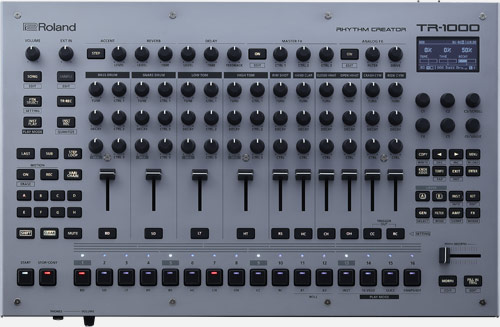
What Makes the TR-1000 Special
This is not just another drum machine with a higher price. The TR-1000 blends analog circuit modeling with modern digital engines in a way that differs from Roland's previous offerings. You get 16 carefully reconstructed TR-808 and TR-909 voices with expanded parameters and modern headroom, so the classic sounds have more breathing room and flexibility than the originals.
Roland did not stop there. Alongside the analog modeling, the unit includes FM, VA, and PCM synthesis engines. That covers bass lines with depth, synth textures that go weird, and access to over 2,500 onboard sounds ranging from classic Roland libraries to experimental digital textures. It’s a sound palette that could genuinely inspire you to dig deeper into your productions.
The sequencer is where things get interesting for live work. The TR-REC step sequencer gives you off-grid control, probability settings, motion recording, and tactile performance tools like the Morph slider and snapshots. If you’re into live jamming or want more organic, human-feeling rhythms, this is where the TR-1000 shines.
The Sampling Game Changer
This is where your workflow might actually change. The TR-1000 packs 46GB of onboard storage and a sampling engine that supports non-destructive slicing, time-stretching, BPM sync, and stereo sampling and resampling. You can record external gear, chop loops, and manipulate samples in real time without reaching for your computer.
For producers working in melodic techno, afro house, and tech house, this is massive. You can sample a vocal hook, slice it across the sequencer, time-stretch it to fit your BPM, and layer it with analog kicks all on one piece of hardware. That makes it a complete production tool, not just a drum machine.
The onboard effects help too. You get analog filters and drive for character, plus digital reverbs, delays, compressors, and a 1176-style FET compressor that can add serious punch to your drums. Each of the 14 tracks has its own processing chain with multimode filters, four-band EQ, and per-track effects routing.
The Price Tag Reality Check
Let’s be real about the elephant in the room. At $2,699, the TR-1000 is not an impulse buy for most bedroom producers. For context, you could buy an Elektron Analog Four, a solid audio interface, and stock your sample library with that budget, or pick up a used TR-8S or TR-8 for a fraction of the cost.
The question is not whether $2,699 is expensive, it’s whether the TR-1000 does something the competition cannot. Roland seems to be betting that the combination of analog modeling, advanced sequencing, integrated sampling, and performance features justifies the premium. For certain producers, that is a yes. For others, it is overkill.
Here’s what matters: are you someone who needs all these tools integrated into one device? If you’re building around hardware and want to minimize software, the TR-1000 could save you from buying three separate pieces of gear. If you’re already deep in a DAW workflow and just need solid drum sounds, you might find the price harder to justify.
Who Should Actually Buy This
The TR-1000 makes the most sense for producers who fit a few specific categories. First, if you’re a live performer who needs a self-contained rig that can handle drums, effects, and sampling without a computer, this does that incredibly well. The build quality is professional grade with durable faders and high-grip knobs designed for the road.
Second, if you work in genres like melodic techno or tech house where layered drums and intricate sound design are central to your sound, the per-track effects and stacking capabilities could elevate your productions. The ability to layer multiple sound generators on four dedicated tracks opens up textural possibilities that single-layer drum machines cannot touch.
Third, if you’ve been thinking about moving away from software and building a hybrid hardware and DAW setup, the TR-1000 could be your centerpiece. The USB-C connectivity and the fact that it works as a multi-channel audio and MIDI interface means it integrates cleanly into modern studios.
What about casual bedroom producers or people just getting into hardware? Honestly, there are better entry points. The TR-1000 is built for producers who already understand what they need and can justify the investment in specialized features.
The Verdict: Investment or Overpriced
Roland packed genuine innovation into the TR-1000. The analog circuit modeling is solid, the sequencer is feature rich, and the sampling capabilities are legit. But whether it is worth $2,699 depends entirely on your workflow and production style.
If you’re the type of producer who values tactile control, loves hardware workflow, and creates complex drum arrangements with layered textures, the TR-1000 could be a game changer. The sound quality is there, the sequencing is powerful, and the build quality justifies a chunk of that price tag.
If you’re looking for just a drum machine to trigger from your DAW, or if you’re still building your foundational gear collection, save your money and grab something more affordable. The TR-1000 is not a jack-of-all-trades bargain, it is a specialized tool for producers who know exactly what they need.
The real question to ask yourself: does this drum machine solve a specific problem in your setup, or would it be cool to have? That answer matters more than Roland’s price point.